
Mostrando entradas con la etiqueta Tecnología. Mostrar todas las entradas
Mostrando entradas con la etiqueta Tecnología. Mostrar todas las entradas
domingo, 13 de octubre de 2013

jueves, 10 de octubre de 2013
sábado, 31 de diciembre de 2011
Multimedia Dock
Hace un par de años que empecé a usar los dock/carry-disk/base (como quieran llamarlos) con discos internos, mucho más cómodo que usar un enclosure o económico que comprar un disco externo. Lo mismo aplicaría entonces con los discos multimedia, y acá están, los dock multimedia, no tan completos como los discos multimedias más completos, pero entre los componentes y el hdmi supongo que por un tiempo alcanza. Lo que todavía quiero que alguien que los haya probado me cuente es: cómo genera la tv el menu con carpetas y películas, o los dock multimedia requieren televisores de una generación específica y los discos multimedias (como los reproductores de dvd) se encargan de generar la interface por si mismos?

y un video muy gracioso para los que tienen más dudas que yo, al mejor estilo no stupid questions español, baldesitos de colores rojo verde y azul.
domingo, 27 de noviembre de 2011
Image Systems - Phoenix Restoration DVO
Dejo aquí un video de Image Systems (ex Digital Vision) sobre las funciones de DVO (Digital Vision Optics) del Phoenix Restore 2011. Sinceramente encontré hoy el sitio (a través de una nota sobre workflow de avid a nucoda en colograder.net via feedly) y nunca había escuchado nombrar antes de estos programas. Tiene varias funciones automáticas y unas funciones de interpolación y promedio entre cuadros excelentes para la herramienta de clonación. Acá pueden ver una lista de highlights.
Estoy muy entusiasmado, me quedo viendo el sitio e investigando un poco más.. alguien sabe cuanto cuesta esta preciosura?
Sí, ya se.. horrible la interface similar al scratch o al combustion, y la forma de marcar el offset puede ser un tanto engorrosa si no inventaron un atajo, pero los resultados dan que hablar.
Excelente el DVO Steady!
domingo, 6 de noviembre de 2011
Dynamic Link to bring Warp Stabilizer
De la mano de ProVideo Coalition, una razón más que importante para usar Premiere en vez de.. qué otra cosa existe?


sábado, 5 de noviembre de 2011
XXIT - Canon Cinema C300
De la mano de Canon Cinema Gallery me pasaron el dato de este cortometraje estilo Blade Runner cuya postproducción me llamó bastante la atención, incluso despertó bastantes dudas del tipo HOW THEY DO THAT. Pero hasta que no me llegue material de la cámara voy a dudar de muchas de las exclamaciones expresas en el video. Es decir, está fotokem, stargate studios, etc etc detrás, pero no deja de ser un institucional. Igualmente no voy a negar que estoy sorprendido de algunos detalles.
Disculpen que no embeba el video pero simplemente no autorizaron esa función.


jueves, 3 de noviembre de 2011
Canon C300 vs Red Scarlet
UPDATE: Tabla comparativa: RED SCARLET-X vs. Canon EOS C300
Finalmente llegó el día (tan) esperado y es bastante tarde como para que me siente a mirar las especificaciones. Mañana seguramente le dedique un rato al mediodía, pero lo primero que ya me sorprende son los precios: Siempre pensé que la cámara de canon sería mucho más económica que la de Red, y es nada menos que el doble!
Finalmente llegó el día (tan) esperado y es bastante tarde como para que me siente a mirar las especificaciones. Mañana seguramente le dedique un rato al mediodía, pero lo primero que ya me sorprende son los precios: Siempre pensé que la cámara de canon sería mucho más económica que la de Red, y es nada menos que el doble!
Bien, ya me adelanté y dije que todavía no vi las especificaciones y probablemente la de red sea sólo el cuerpo (o el control remoto) mientras que la otra la cámara completa, pero de base, cuesta más que el cuerpo de la red one.. literalmente le agregaron un 0 al costo de la 7D que tanta fama les hizo en los últimos 2 años (buena.. mala... fama). Y, ya leí por arriba que la canon es un mpeg de 8-bit (uff...).
Un par de links para ver mañana:
RED SCARLET

CANON CINEMA C300

sábado, 22 de octubre de 2011
PostMagazine
Encontré una nota que había publicado hace un año en un blog viejo (que estoy mudando publicaciones a este) de postmagazine sobre Avid rompiéndole el teclado a Final Cut con el lanzamiento de Media Composer 5 y nunca más lo visité. Lo anoto para volver a nunca más visitarlo o tenerlo en cuenta para otra ocasión más afortunada, tal vez haya algún artículo sobre Adobe rompiéndole el UPS a Avid y Final Cut en cuatro.
Post Magazine - where technology and talent meet

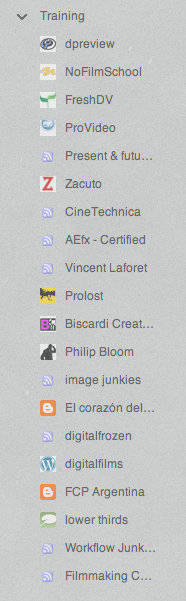
My professional training lists
Mis listas recurrentes (y no tanto) de actualización profesional en twitter y feedly.
Acepto sugerencias.


lunes, 17 de octubre de 2011
Automatic Synchronization (x2)
Herramientas que tardan muchos meses, incluso años en producirse y que sirven para ahorrarle horas de trabajo al hombre y convertir el proceso productivo en algo tan efímero que espero que el proceso creativo no se vea perjudicado por los deadline recortados ante la posibilidad de hacer las cosas tan rápido.
Sincronización automática de multicámara por análisis de la imagen.
Automatic Synchronization of crowd sourced videos
Sincronización automática del speech (sí no sé cómo decirlo)
Rubbadub

Sincronización automática de multicámara por análisis de la imagen.
Automatic Synchronization of crowd sourced videos
Sincronización automática del speech (sí no sé cómo decirlo)
Rubbadub

Debluring - Photoshop Sneak
OMG - Finalmente lo hicieron posible. LINK
Tras años de ficción desautorizada en películas y series policiales, ADOBE lo hizo posible y reconstruyen lo que ya no podemos ver, pero que "algorítmicamente" es posible reconstruir.
Say goodbye to the shaky hand photo!
Todavía no sé si estoy emocionado por el Debluring o por las pantallas flotantes que no tengo idea de dónde están proyectadas...

Tras años de ficción desautorizada en películas y series policiales, ADOBE lo hizo posible y reconstruyen lo que ya no podemos ver, pero que "algorítmicamente" es posible reconstruir.
Say goodbye to the shaky hand photo!
Todavía no sé si estoy emocionado por el Debluring o por las pantallas flotantes que no tengo idea de dónde están proyectadas...

jueves, 23 de junio de 2011

domingo, 29 de mayo de 2011
lunes, 16 de mayo de 2011
Tweet Deck

Aplicación para Chrome (también iPhone y esos chiches) para administrar las listas de twitter y facebook.
LTO Technology
Partitioning – Linear Tape File System (LTFS)
What is LTO partitioning?
The LTO Specification, beginning with Generation 5, enables the drive to segment the tape media into 2 partitions which can be independently accessed to help provide faster data access and improved data management.
What is the LTFS?
The LTFS specification defines an extension to the operating system. Users can download it and install it on their computer. The LTFS is enabled by the dual partitioning capability of LTO Generation 5 technology. The LTFS provides file system access at the operating system level especially for unstructured data. It uses one partition to hold the content’s index and the other partition to hold the content. The tape becomes self-describing. LTFS can allow viewing and access of tape files in a fashion like disk or other removable media including directory tree structures. The LTFS specification can be viewed and downloaded at the Ultrium.com website.
What operating systems does the LTFS support?
The LTFS is planned for support on specific versions of Linux, MAC OS, and MS Windows.
How is the LTFS obtained?
The LTFS is open source and may be available from a variety of locations. Please contact your vendor for more information.
What benefits are expected from use of the LTFS?
Potential user benefits include:
- Ability to access data faster and more easily update files on tape: drag and drop
- Non-proprietary data format file system that is independent of specific software applications
- Can address long term archive strategies by creating a self describing tape that has no application dependencies
- Can help enhance ease of use, tape mobility, and sharing of data on tape between different platforms and users
Encryption
Why is encryption being offered on the LTO Ultrium generation 4 and 5 tape drive specification?
Protection of customer information is a significant business issue. Losing a consumer's information can be very expensive from an actual cost recovery and public relations perspective. Encrypting data helps protect customer's information from many types of compromise. The LTO Ultrium Generation 4 and 5 tape drive encryption can help address this need.
What method of encryption will be used in Generation 4 and 5 tape drives?
LTO drives use "AES encryption algorithm, with 256-bit keys, in GCM mode." A shorter way to say it is "256-bit AES in GCM mode" or "AES256-GCM."
The Advanced Encryption Standard with Galois/Counter Mode of Operation (AES+GCM) is a block cipher that provides authenticated encryption that can achieve very high speeds in hardware with low cost and low latency. It helps provide both data confidentiality and data integrity in a single, easy to use construct.
What standards will LTO encryption comply with or utilize?
LTO encryption complies with and/or utilizes The Galois/Counter Mode of Operation (GCM), Advanced Encryption Standard (AES), IEEE SPC-4 SCSI Primary Commands, IEEE SSC-3 SCSI Stream Commands and IEEE P1619.1TM/D13, Draft Standard for Authenticated Encryption with Length Expansion for Storage Devices.
Will a special cartridge be required?
Generation 4 and 5 standard or WORM tape data cartridges are required for encryption.
Will encryption adversely affect drive performance?
No, it should not. The impact of hardware encryption on tape drive performance is expected to be typically less than 1%. LTO encrypting tape drives will use GCM for encryption/authentication, and this will allow the drives to achieve high performance, though it will be up to each individual tape drive vendor to select its specific GCM implementation.
Will encryption be offered on every Generation 4 and 5 tape drive?
While encryption capabilities are defined in the Generation 4 and 5 specifications, encryption is an optional feature that LTO vendors can include or not include, based on their individual product lines.
What will users have to do to utilize LTO encryption?
Users will enable encryption/decryption on the encrypting Generation 4 or 5 tape drive and provide a key.
The drive specifications state that LTO Generation 4 and 5 drives support the SCSI Security Protocol commands, which may be used to enable encryption, and provide a key to the drive. Some vendor implementations may enable encryption and provide a key through a proprietary channel.
What happens when I insert a tape cartridge encrypted on a Generation 4 or 5 drive into a drive that does not encrypt or decrypt?
The drive specification is designed to know how to handle the cartridge, and eject the cartridge.
How will encryption and the keys be implemented?
Encryption is performed in-hardware. Keys are presented to the drive from an external key management system.
Will Generation 4 or 5 drives offer encryption key management?
Key management is not part of the LTO Ultrium drive specification. However, the format has been designed to work with third party key management software and it is expected that key management systems will be provided by a variety of sources that could include LTO licensees, tape automation providers, and independent software vendors.
Will the whole cartridge be encrypted or can only certain records/files on a cart be encrypted?
The LTO specifications do not limit this capability. Depending on the key management system and application an intermix of encrypted and unencrypted records may be stored on the same cartridge but in practice the whole cartridge will typically be encrypted.
What happens if a Generation 4 or 5 encrypted cartridge is put in a lower generation drive (LTO-3, LTO-2 or LTO-1)?
An earlier generation drive is designed to reject an attempt to access a higher generation cartridge.
What happens if a Generation 4 encrypted cartridge is put in a non-encrypting Generation 4 or 5 drive?
If a Generation 4 or 5 drive without hardware encryption option tries to read encrypted portions of a cartridge, it will report that the data is encrypted.
Could a Generation 4 drive encrypt to a Generation 3 cartridge?
No.
Can a Generation 5 drive encrypt a Generation 4 cartridge?
Yes.
What are the benefits of encrypting data at the drive level vs. using an appliance in the network or software encryption?
Encrypting at the tape drive level can provide performance and capacity advantages for administrators. Encryption at the tape drive level enables compression before encryption, maximizing tape capacities, and allows high performance during backup. Encrypting using an appliance device in the network can create latencies that affect backup performance, and requires management of the additional device. Encrypting data at tape speed helps to avoid the need for host-based encryption of data — and the concurrent drain on host performance.
Will encryption cost more?
Although Generation 4 and 5 tape drives with advanced functionality, such as encryption, can return value to business, individual tape drive vendors establish their own product prices.
Why does it make sense for users to select their own key management system?
As an open, standards-based format, LTO Generation 4 and 5 have been designed to work with standard third party software allowing organizations to choose best of breed solutions with the vendor of their choice.
How will LTO encryption affect LTO cartridge interchange compatibility?
LTO cartridge interchange remains unchanged. That is, an encrypted cartridge on one vendor's drive can be read on another vendor's drive given that the drive is a compatible generation, an encryption capable drive and is provided the correct encryption key. The administration of the encryption keys is typically handled by software which is outside the scope of the LTO Ultrium format specification. Encryption management software could be a factor in the interchange of an encrypted tape cartridge and should be taken into consideration when planning for encrypted cartridge interchange. Drives from different vendors that use the same software infrastructure should be interchange compatible. Drives in different locations may need compatible key management software or other less automated methods at each location to foster cartridge interchange. Please contact your system provider for more information.
Format
What is the status of LTO Generation 5?
The availability of the Generation 5 specifications was announced in January 2010 and it is anticipated that products will become available throughout 2010.
What is the status of LTO Technology roadmap and future generations?
In 1998, the LTO Program took great pains to establish a credible roadmap consisting of four generations. IT and storage managers have come to rely on the roadmap for decision-making. As such, the LTO Program conducted extensive end user, analyst and tape storage trend research to update the roadmap beyond generation four.
In December 2004, the LTO Program announced an update to the LTO Ultrium format roadmap to include generations 5 and 6 with a performance update to generation 4.
In April 2010, the LTO Program announced an update to the LTO Ultrium format roadmap to include generations 7 and 8 with a performance update to generation 6.

The updated roadmap calls for the following capacity and performance figures:
Generation 6
Capacity: 8 TB (assuming a 2.5:1 compression)
Data transfer speed: up to 525 MB/s (assuming a 2.5:1 compression)
Generation 7
Capacity: 16 TB (assuming a 2.5:1 compression)
Data transfer speed: up to 788 MB/s (assuming a 2.5:1 compression)
Generation 8
Capacity: 32 TB (assuming a 2.5:1 compression)
Data transfer speed: up to 1180 MB/s (assuming a 2.5:1 compression)
How will the LTO program achieve the higher capacity and data transfer speeds?
The TPCs will continue to research and implement state-of-the-art technological advancements that impact reliability, capacities and transfer rates. These advancements leverage key tape drive attributes including media type, encoding scheme, tape speed, tape length, linear density, areal density-data tracks, and history buffers.
Specifications for Generations 6, 7, and 8 include a larger compression history buffer. Tests show that this buffer can increase compression to 2.5 to 1, allowing for higher compressed capacities.
Does the LTO Program offer Write Once, Read Many (WORM) technology?
Yes. The LTO Program included the availability of an enhancement that provides LTO technology manufacturers with the opportunity to offer Write Once, Read Many (WORM) functionality for LTO Ultrium format beginning with Generation 3.
What is the Ultrium format?
The Ultrium tape format specification is the implementation of LTO (Linear Tape-Open) Technology optimized for high capacity and performance, in either a stand-alone or an automated environment. The Ultrium format uses a single-reel tape cartridge to maximize capacity, and it is ideally suited for backup, restore and archive applications. It is expected that the Ultrium tape format will address the needs of the single server user and complex multiple server enterprise environment with a roadmap, or migration path, which extends into the future. The Ultrium tape format establishes a new benchmark for large volume backup and archive.
Are products based on the Ultrium format compatible with any other storage products that exist today?
LTO-based products are not compatible with non-LTO tape products. The underlying premise of the LTO Program was to create a pro-competitive environment that included multiple vendors offering unique feature sets while maintaining data interchange among competing LTO offerings.
How can users be sure of data interchangeability among Ultrium format products?
The Ultrium format trademark identifies products that are subject to annual third-party compliance verification sample testing to verify that these products comply with the Ultrium tape format specification. This compliance will maximize the likelihood for data interchange of Ultrium tape cartridges between different manufacturers' Ultrium tape mechanisms. Use of this trademark will be granted only after an Ultrium tape format product has passed the compliance verification testing process.
What are the backward compatibility characteristics of the Ultrium format?
The LTO Ultrium compatibility is defined with two concepts demonstrating investment protection: 1) An Ultrium drive can read data from a cartridge in its own generation and two prior generations. 2) An Ultrium drive can write data to a cartridge in its own generation and to a cartridge from the immediate prior generation in the prior generation format.
For example:
- An Ultrium format Generation 5 drive will read and write data on an Ultrium format Generation 4 cartridge as specified by the Generation 4 format and read data on an Ultrium format Generation 3 drive.
- An Ultrium format Generation 4 drive will read and write data on an Ultrium format Generation 3 cartridge as specified by the Generation 3 format and read data on an Ultrium format Generation 2 drive
Technology
What is LTO Technology?
LTO Technology, or Linear Tape-Open Technology, combines the advantages of linear multi-channel bi-directional tape formats in common usage today with enhancements in the areas of timing-based servo, hardware data compression, optimized track layouts and high efficiency error correction code to maximize capacity and performance.
What do Hewlett -Packard, IBM and Quantum, contribute to LTO Technology?
HP, IBM and Quantum each provide expert knowledge of customer needs and complementary technology that provide for delivery of a best-of-breed technology and promotes a strong foundation for data interchange. It is the intent of the program that other companies can participate in this tape industry opportunity through the open licensing process.
What is the availability of products based on LTO Technology, and how are they priced?
The LTO Program announced the availability of the Generation 5 specification to licensees in January 20010. Ultrium format Generation 4 products are available now. Ultrium format Generation 3 tape storage products began to appear in the market in late 2004. Typically, products based on each new generation of LTO technology emerge every 18 to 24 months. For specific pricing questions, please contact the individual companies sourcing those products, and be sure to visit the LTO Program website at www.ultrium.com/technology/buy.html for updated information on LTO licensed companies from whom specific product information can be expected.
Licensing
How can manufacturers who wish to develop products based on the Ultrium tape format specification obtain a license?
Specifications and license packages are available for Generation 5,Generation 4 and Generation 3 licenses. Full details can be obtained by contacting the LTO Program through this link: the Licensing Administrator
How can I best determine if I should buy a license and which one to buy?
Deciding whether to buy a license and which one is an individual matter. If the Licensing Information available through the Licensing Administrator or this website ( http://www.ultrium.com ) does not provide you with enough information about the format specifications, you may want to consider purchasing a Basic Package. Each of these licenses provides the tape mechanism and the tape cartridge specifications for the applicable format. These Basic Packages are available for a nominal fee. If you are interested in either of these packages, please contact the LTO Program through this link. Licensing Administrator
I have purchased the Ultrium format Generation 4 Basic Package, Ultrium Specification Document (AP-36), and have decided to purchase one of the Enhanced Packages, Ultrium Tape Mechanism License (AP-34) or Ultrium Tape Cartridge License (AP-35). Do I get credit for the license fee paid for the Basic Package against the fee for the Enhanced Package license?
No.
I have purchased the Ultrium format Generation 3 Basic Package, Ultrium Specification Document (AP-26), and have decided to purchase one of the Enhanced Packages, Ultrium Tape Mechanism License (AP-24) or Ultrium Tape Cartridge License (AP-25). Do I get credit for the license fee paid for the Basic Package against the fee for the Enhanced Package license?
No.
I have purchased the Ultrium format Generation 2 Basic Package, Ultrium Specification Document (AP-6), and have decided to purchase one of the Enhanced Packages, Ultrium Tape Mechanism License (AP-4) or Ultrium Tape Cartridge License (AP-5). Do I get credit for the license fee paid for the Basic Package against the fee for the Enhanced Package license?
No.
Does the LTO Program provide specifications for the Accelis format? If not, why?
No. The Accelis concept was developed in 1997 to meet customer demands for fast access to data by using a two-reel cartridge that loads in the middle of the tape to minimize access time. However, because of technological developments that have occurred since it was first developed, coupled with the fact that customers have demonstrated strong satisfaction with the attributes of the LTO Ultrium tape format, there has been no significant demand for Accelis. Thus, no licenses are being offered at this time.
Why did Hewlett-Packard, IBM and Quantum develop new open tape format specifications?
Customers, OEMs and industry analysts believed that the fragmentation in the tape industry and proliferation of formats and technologies overly complicated customer-buying decisions. With these issues in mind HP, IBM and Quantum took steps to define a technology that has led to open tape format specifications that can better serve multiple needs for storage and be supported by multiple suppliers.
What is an "open tape format specification?"
An open tape format specification is one that is readily available to all potential manufacturers and offers licenses for the IP (Intellectual Property) at a reasonable investment. 19: Why is tape so popular for data protection today? Considering backup strategies with disk technology, how long will tape be a viable and desirable solution?
Tape remains unrivaled in terms of cost and capacity for data storage, and with its removable and portable attributes, tape should continue to play an increasing crucial role in corporate data protection strategies. No other technology offers the same combined low cost and high capacity advantage of tape. While other technologies may offer strengths in one or more areas, overall, they do not meet the entire set of customer needs that tape addresses. A complementary blend of tape and disk can help customers address a variety of storage goals including performance, compliance, security, data retention and total cost of ownership.
How does an open tape format specification ultimately benefit customers?
The end-user customer and OEMs benefit from this open tape format specification approach through the availability of multiple sources of tape mechanisms, multiple sources of tape cartridges and common tape format specifications for interoperability. The competitive environment fostered by multiple sources of product can lead to faster paced innovation and enhancements, and can generally mean competitive prices and can provide for data compatibility.
For OEMs, open tape format specifications can shorten qualification cycles and reduce complexities in system configuration.
Note: LTO Ultrium format specifications and roadmap are subject to change. Performance, compression and capacities are estimates. User results may vary.

domingo, 15 de mayo de 2011


martes, 22 de febrero de 2011
Whisper Systems

Mobile Security for android.
Encrypted Voice for you smartphone
Ecrypted texts for your smartphone
sábado, 11 de diciembre de 2010
LTO
Partitioning – Linear Tape File System (LTFS)
What is LTO partitioning?The LTO Specification, beginning with Generation 5, enables the drive to segment the tape media into 2 partitions which can be independently accessed to help provide faster data access and improved data management.
What is the LTFS?
The LTFS specification defines an extension to the operating system. Users can download it and install it on their computer. The LTFS is enabled by the dual partitioning capability of LTO Generation 5 technology. The LTFS provides file system access at the operating system level especially for unstructured data. It uses one partition to hold the content’s index and the other partition to hold the content. The tape becomes self-describing. LTFS can allow viewing and access of tape files in a fashion like disk or other removable media including directory tree structures. The LTFS specification can be viewed and downloaded at the Ultrium.com website.
The LTFS specification defines an extension to the operating system. Users can download it and install it on their computer. The LTFS is enabled by the dual partitioning capability of LTO Generation 5 technology. The LTFS provides file system access at the operating system level especially for unstructured data. It uses one partition to hold the content’s index and the other partition to hold the content. The tape becomes self-describing. LTFS can allow viewing and access of tape files in a fashion like disk or other removable media including directory tree structures. The LTFS specification can be viewed and downloaded at the Ultrium.com website.
What operating systems does the LTFS support?
The LTFS is planned for support on specific versions of Linux, MAC OS, and MS Windows.
The LTFS is planned for support on specific versions of Linux, MAC OS, and MS Windows.
How is the LTFS obtained?
The LTFS is open source and may be available from a variety of locations. Please contact your vendor for more information.
The LTFS is open source and may be available from a variety of locations. Please contact your vendor for more information.
What benefits are expected from use of the LTFS?
Potential user benefits include:
Potential user benefits include:
- Ability to access data faster and more easily update files on tape: drag and drop
- Non-proprietary data format file system that is independent of specific software applications
- Can address long term archive strategies by creating a self describing tape that has no application dependencies
- Can help enhance ease of use, tape mobility, and sharing of data on tape between different platforms and users
Encryption
Why is encryption being offered on the LTO Ultrium generation 4 and 5 tape drive specification?
Protection of customer information is a significant business issue. Losing a consumer's information can be very expensive from an actual cost recovery and public relations perspective. Encrypting data helps protect customer's information from many types of compromise. The LTO Ultrium Generation 4 and 5 tape drive encryption can help address this need.
Protection of customer information is a significant business issue. Losing a consumer's information can be very expensive from an actual cost recovery and public relations perspective. Encrypting data helps protect customer's information from many types of compromise. The LTO Ultrium Generation 4 and 5 tape drive encryption can help address this need.
What method of encryption will be used in Generation 4 and 5 tape drives?
LTO drives use "AES encryption algorithm, with 256-bit keys, in GCM mode." A shorter way to say it is "256-bit AES in GCM mode" or "AES256-GCM."
LTO drives use "AES encryption algorithm, with 256-bit keys, in GCM mode." A shorter way to say it is "256-bit AES in GCM mode" or "AES256-GCM."
The Advanced Encryption Standard with Galois/Counter Mode of Operation (AES+GCM) is a block cipher that provides authenticated encryption that can achieve very high speeds in hardware with low cost and low latency. It helps provide both data confidentiality and data integrity in a single, easy to use construct.
What standards will LTO encryption comply with or utilize?
LTO encryption complies with and/or utilizes The Galois/Counter Mode of Operation (GCM), Advanced Encryption Standard (AES), IEEE SPC-4 SCSI Primary Commands, IEEE SSC-3 SCSI Stream Commands and IEEE P1619.1TM/D13, Draft Standard for Authenticated Encryption with Length Expansion for Storage Devices.
LTO encryption complies with and/or utilizes The Galois/Counter Mode of Operation (GCM), Advanced Encryption Standard (AES), IEEE SPC-4 SCSI Primary Commands, IEEE SSC-3 SCSI Stream Commands and IEEE P1619.1TM/D13, Draft Standard for Authenticated Encryption with Length Expansion for Storage Devices.
Will a special cartridge be required?
Generation 4 and 5 standard or WORM tape data cartridges are required for encryption.
Generation 4 and 5 standard or WORM tape data cartridges are required for encryption.
Will encryption adversely affect drive performance?
No, it should not. The impact of hardware encryption on tape drive performance is expected to be typically less than 1%. LTO encrypting tape drives will use GCM for encryption/authentication, and this will allow the drives to achieve high performance, though it will be up to each individual tape drive vendor to select its specific GCM implementation.
No, it should not. The impact of hardware encryption on tape drive performance is expected to be typically less than 1%. LTO encrypting tape drives will use GCM for encryption/authentication, and this will allow the drives to achieve high performance, though it will be up to each individual tape drive vendor to select its specific GCM implementation.
Will encryption be offered on every Generation 4 and 5 tape drive?
While encryption capabilities are defined in the Generation 4 and 5 specifications, encryption is an optional feature that LTO vendors can include or not include, based on their individual product lines.
While encryption capabilities are defined in the Generation 4 and 5 specifications, encryption is an optional feature that LTO vendors can include or not include, based on their individual product lines.
What will users have to do to utilize LTO encryption?
Users will enable encryption/decryption on the encrypting Generation 4 or 5 tape drive and provide a key.
Users will enable encryption/decryption on the encrypting Generation 4 or 5 tape drive and provide a key.
The drive specifications state that LTO Generation 4 and 5 drives support the SCSI Security Protocol commands, which may be used to enable encryption, and provide a key to the drive. Some vendor implementations may enable encryption and provide a key through a proprietary channel.
What happens when I insert a tape cartridge encrypted on a Generation 4 or 5 drive into a drive that does not encrypt or decrypt?
The drive specification is designed to know how to handle the cartridge, and eject the cartridge.
The drive specification is designed to know how to handle the cartridge, and eject the cartridge.
How will encryption and the keys be implemented?
Encryption is performed in-hardware. Keys are presented to the drive from an external key management system.
Encryption is performed in-hardware. Keys are presented to the drive from an external key management system.
Will Generation 4 or 5 drives offer encryption key management?
Key management is not part of the LTO Ultrium drive specification. However, the format has been designed to work with third party key management software and it is expected that key management systems will be provided by a variety of sources that could include LTO licensees, tape automation providers, and independent software vendors.
Key management is not part of the LTO Ultrium drive specification. However, the format has been designed to work with third party key management software and it is expected that key management systems will be provided by a variety of sources that could include LTO licensees, tape automation providers, and independent software vendors.
Will the whole cartridge be encrypted or can only certain records/files on a cart be encrypted?
The LTO specifications do not limit this capability. Depending on the key management system and application an intermix of encrypted and unencrypted records may be stored on the same cartridge but in practice the whole cartridge will typically be encrypted.
The LTO specifications do not limit this capability. Depending on the key management system and application an intermix of encrypted and unencrypted records may be stored on the same cartridge but in practice the whole cartridge will typically be encrypted.
What happens if a Generation 4 or 5 encrypted cartridge is put in a lower generation drive (LTO-3, LTO-2 or LTO-1)?
An earlier generation drive is designed to reject an attempt to access a higher generation cartridge.
An earlier generation drive is designed to reject an attempt to access a higher generation cartridge.
What happens if a Generation 4 encrypted cartridge is put in a non-encrypting Generation 4 or 5 drive?
If a Generation 4 or 5 drive without hardware encryption option tries to read encrypted portions of a cartridge, it will report that the data is encrypted.
If a Generation 4 or 5 drive without hardware encryption option tries to read encrypted portions of a cartridge, it will report that the data is encrypted.
Could a Generation 4 drive encrypt to a Generation 3 cartridge?
No.
No.
Can a Generation 5 drive encrypt a Generation 4 cartridge?
Yes.
Yes.
What are the benefits of encrypting data at the drive level vs. using an appliance in the network or software encryption?
Encrypting at the tape drive level can provide performance and capacity advantages for administrators. Encryption at the tape drive level enables compression before encryption, maximizing tape capacities, and allows high performance during backup. Encrypting using an appliance device in the network can create latencies that affect backup performance, and requires management of the additional device. Encrypting data at tape speed helps to avoid the need for host-based encryption of data — and the concurrent drain on host performance.
Encrypting at the tape drive level can provide performance and capacity advantages for administrators. Encryption at the tape drive level enables compression before encryption, maximizing tape capacities, and allows high performance during backup. Encrypting using an appliance device in the network can create latencies that affect backup performance, and requires management of the additional device. Encrypting data at tape speed helps to avoid the need for host-based encryption of data — and the concurrent drain on host performance.
Will encryption cost more?
Although Generation 4 and 5 tape drives with advanced functionality, such as encryption, can return value to business, individual tape drive vendors establish their own product prices.
Although Generation 4 and 5 tape drives with advanced functionality, such as encryption, can return value to business, individual tape drive vendors establish their own product prices.
Why does it make sense for users to select their own key management system?
As an open, standards-based format, LTO Generation 4 and 5 have been designed to work with standard third party software allowing organizations to choose best of breed solutions with the vendor of their choice.
As an open, standards-based format, LTO Generation 4 and 5 have been designed to work with standard third party software allowing organizations to choose best of breed solutions with the vendor of their choice.
How will LTO encryption affect LTO cartridge interchange compatibility?
LTO cartridge interchange remains unchanged. That is, an encrypted cartridge on one vendor's drive can be read on another vendor's drive given that the drive is a compatible generation, an encryption capable drive and is provided the correct encryption key. The administration of the encryption keys is typically handled by software which is outside the scope of the LTO Ultrium format specification. Encryption management software could be a factor in the interchange of an encrypted tape cartridge and should be taken into consideration when planning for encrypted cartridge interchange. Drives from different vendors that use the same software infrastructure should be interchange compatible. Drives in different locations may need compatible key management software or other less automated methods at each location to foster cartridge interchange. Please contact your system provider for more information.
LTO cartridge interchange remains unchanged. That is, an encrypted cartridge on one vendor's drive can be read on another vendor's drive given that the drive is a compatible generation, an encryption capable drive and is provided the correct encryption key. The administration of the encryption keys is typically handled by software which is outside the scope of the LTO Ultrium format specification. Encryption management software could be a factor in the interchange of an encrypted tape cartridge and should be taken into consideration when planning for encrypted cartridge interchange. Drives from different vendors that use the same software infrastructure should be interchange compatible. Drives in different locations may need compatible key management software or other less automated methods at each location to foster cartridge interchange. Please contact your system provider for more information.
Format
What is the status of LTO Generation 5?
The availability of the Generation 5 specifications was announced in January 2010 and it is anticipated that products will become available throughout 2010.
The availability of the Generation 5 specifications was announced in January 2010 and it is anticipated that products will become available throughout 2010.
What is the status of LTO Technology roadmap and future generations?
In 1998, the LTO Program took great pains to establish a credible roadmap consisting of four generations. IT and storage managers have come to rely on the roadmap for decision-making. As such, the LTO Program conducted extensive end user, analyst and tape storage trend research to update the roadmap beyond generation four.
In 1998, the LTO Program took great pains to establish a credible roadmap consisting of four generations. IT and storage managers have come to rely on the roadmap for decision-making. As such, the LTO Program conducted extensive end user, analyst and tape storage trend research to update the roadmap beyond generation four.
In December 2004, the LTO Program announced an update to the LTO Ultrium format roadmap to include generations 5 and 6 with a performance update to generation 4.
In April 2010, the LTO Program announced an update to the LTO Ultrium format roadmap to include generations 7 and 8 with a performance update to generation 6.
The updated roadmap calls for the following capacity and performance figures:
Generation 6
Capacity: 8 TB (assuming a 2.5:1 compression)
Data transfer speed: up to 525 MB/s (assuming a 2.5:1 compression)
Capacity: 8 TB (assuming a 2.5:1 compression)
Data transfer speed: up to 525 MB/s (assuming a 2.5:1 compression)
Generation 7
Capacity: 16 TB (assuming a 2.5:1 compression)
Data transfer speed: up to 788 MB/s (assuming a 2.5:1 compression)
Capacity: 16 TB (assuming a 2.5:1 compression)
Data transfer speed: up to 788 MB/s (assuming a 2.5:1 compression)
Generation 8
Capacity: 32 TB (assuming a 2.5:1 compression)
Data transfer speed: up to 1180 MB/s (assuming a 2.5:1 compression)
Capacity: 32 TB (assuming a 2.5:1 compression)
Data transfer speed: up to 1180 MB/s (assuming a 2.5:1 compression)
How will the LTO program achieve the higher capacity and data transfer speeds?
The TPCs will continue to research and implement state-of-the-art technological advancements that impact reliability, capacities and transfer rates. These advancements leverage key tape drive attributes including media type, encoding scheme, tape speed, tape length, linear density, areal density-data tracks, and history buffers.
The TPCs will continue to research and implement state-of-the-art technological advancements that impact reliability, capacities and transfer rates. These advancements leverage key tape drive attributes including media type, encoding scheme, tape speed, tape length, linear density, areal density-data tracks, and history buffers.
Specifications for Generations 6, 7, and 8 include a larger compression history buffer. Tests show that this buffer can increase compression to 2.5 to 1, allowing for higher compressed capacities.
Does the LTO Program offer Write Once, Read Many (WORM) technology?
Yes. The LTO Program included the availability of an enhancement that provides LTO technology manufacturers with the opportunity to offer Write Once, Read Many (WORM) functionality for LTO Ultrium format beginning with Generation 3.
Yes. The LTO Program included the availability of an enhancement that provides LTO technology manufacturers with the opportunity to offer Write Once, Read Many (WORM) functionality for LTO Ultrium format beginning with Generation 3.
What is the Ultrium format?
The Ultrium tape format specification is the implementation of LTO (Linear Tape-Open) Technology optimized for high capacity and performance, in either a stand-alone or an automated environment. The Ultrium format uses a single-reel tape cartridge to maximize capacity, and it is ideally suited for backup, restore and archive applications. It is expected that the Ultrium tape format will address the needs of the single server user and complex multiple server enterprise environment with a roadmap, or migration path, which extends into the future. The Ultrium tape format establishes a new benchmark for large volume backup and archive.
The Ultrium tape format specification is the implementation of LTO (Linear Tape-Open) Technology optimized for high capacity and performance, in either a stand-alone or an automated environment. The Ultrium format uses a single-reel tape cartridge to maximize capacity, and it is ideally suited for backup, restore and archive applications. It is expected that the Ultrium tape format will address the needs of the single server user and complex multiple server enterprise environment with a roadmap, or migration path, which extends into the future. The Ultrium tape format establishes a new benchmark for large volume backup and archive.
Are products based on the Ultrium format compatible with any other storage products that exist today?
LTO-based products are not compatible with non-LTO tape products. The underlying premise of the LTO Program was to create a pro-competitive environment that included multiple vendors offering unique feature sets while maintaining data interchange among competing LTO offerings.
LTO-based products are not compatible with non-LTO tape products. The underlying premise of the LTO Program was to create a pro-competitive environment that included multiple vendors offering unique feature sets while maintaining data interchange among competing LTO offerings.
How can users be sure of data interchangeability among Ultrium format products?
The Ultrium format trademark identifies products that are subject to annual third-party compliance verification sample testing to verify that these products comply with the Ultrium tape format specification. This compliance will maximize the likelihood for data interchange of Ultrium tape cartridges between different manufacturers' Ultrium tape mechanisms. Use of this trademark will be granted only after an Ultrium tape format product has passed the compliance verification testing process.
The Ultrium format trademark identifies products that are subject to annual third-party compliance verification sample testing to verify that these products comply with the Ultrium tape format specification. This compliance will maximize the likelihood for data interchange of Ultrium tape cartridges between different manufacturers' Ultrium tape mechanisms. Use of this trademark will be granted only after an Ultrium tape format product has passed the compliance verification testing process.
What are the backward compatibility characteristics of the Ultrium format?
The LTO Ultrium compatibility is defined with two concepts demonstrating investment protection: 1) An Ultrium drive can read data from a cartridge in its own generation and two prior generations. 2) An Ultrium drive can write data to a cartridge in its own generation and to a cartridge from the immediate prior generation in the prior generation format.
The LTO Ultrium compatibility is defined with two concepts demonstrating investment protection: 1) An Ultrium drive can read data from a cartridge in its own generation and two prior generations. 2) An Ultrium drive can write data to a cartridge in its own generation and to a cartridge from the immediate prior generation in the prior generation format.
For example:
- An Ultrium format Generation 5 drive will read and write data on an Ultrium format Generation 4 cartridge as specified by the Generation 4 format and read data on an Ultrium format Generation 3 drive.
- An Ultrium format Generation 5 drive will read and write data on an Ultrium format Generation 4 cartridge as specified by the Generation 4 format and read data on an Ultrium format Generation 3 drive.
- An Ultrium format Generation 4 drive will read and write data on an Ultrium format Generation 3 cartridge as specified by the Generation 3 format and read data on an Ultrium format Generation 2 drive
Technology
What is LTO Technology?
LTO Technology, or Linear Tape-Open Technology, combines the advantages of linear multi-channel bi-directional tape formats in common usage today with enhancements in the areas of timing-based servo, hardware data compression, optimized track layouts and high efficiency error correction code to maximize capacity and performance.
LTO Technology, or Linear Tape-Open Technology, combines the advantages of linear multi-channel bi-directional tape formats in common usage today with enhancements in the areas of timing-based servo, hardware data compression, optimized track layouts and high efficiency error correction code to maximize capacity and performance.
What do Hewlett -Packard, IBM and Quantum, contribute to LTO Technology?
HP, IBM and Quantum each provide expert knowledge of customer needs and complementary technology that provide for delivery of a best-of-breed technology and promotes a strong foundation for data interchange. It is the intent of the program that other companies can participate in this tape industry opportunity through the open licensing process.
HP, IBM and Quantum each provide expert knowledge of customer needs and complementary technology that provide for delivery of a best-of-breed technology and promotes a strong foundation for data interchange. It is the intent of the program that other companies can participate in this tape industry opportunity through the open licensing process.
What is the availability of products based on LTO Technology, and how are they priced?
The LTO Program announced the availability of the Generation 5 specification to licensees in January 20010. Ultrium format Generation 4 products are available now. Ultrium format Generation 3 tape storage products began to appear in the market in late 2004. Typically, products based on each new generation of LTO technology emerge every 18 to 24 months. For specific pricing questions, please contact the individual companies sourcing those products, and be sure to visit the LTO Program website at www.ultrium.com/technology/buy.html for updated information on LTO licensed companies from whom specific product information can be expected.
The LTO Program announced the availability of the Generation 5 specification to licensees in January 20010. Ultrium format Generation 4 products are available now. Ultrium format Generation 3 tape storage products began to appear in the market in late 2004. Typically, products based on each new generation of LTO technology emerge every 18 to 24 months. For specific pricing questions, please contact the individual companies sourcing those products, and be sure to visit the LTO Program website at www.ultrium.com/technology/buy.html for updated information on LTO licensed companies from whom specific product information can be expected.
Licensing
How can manufacturers who wish to develop products based on the Ultrium tape format specification obtain a license?
Specifications and license packages are available for Generation 5,Generation 4 and Generation 3 licenses. Full details can be obtained by contacting the LTO Program through this link: the Licensing Administrator
Specifications and license packages are available for Generation 5,Generation 4 and Generation 3 licenses. Full details can be obtained by contacting the LTO Program through this link: the Licensing Administrator
How can I best determine if I should buy a license and which one to buy?
Deciding whether to buy a license and which one is an individual matter. If the Licensing Information available through the Licensing Administrator or this website ( http://www.ultrium.com ) does not provide you with enough information about the format specifications, you may want to consider purchasing a Basic Package. Each of these licenses provides the tape mechanism and the tape cartridge specifications for the applicable format. These Basic Packages are available for a nominal fee. If you are interested in either of these packages, please contact the LTO Program through this link. Licensing Administrator
Deciding whether to buy a license and which one is an individual matter. If the Licensing Information available through the Licensing Administrator or this website ( http://www.ultrium.com ) does not provide you with enough information about the format specifications, you may want to consider purchasing a Basic Package. Each of these licenses provides the tape mechanism and the tape cartridge specifications for the applicable format. These Basic Packages are available for a nominal fee. If you are interested in either of these packages, please contact the LTO Program through this link. Licensing Administrator
I have purchased the Ultrium format Generation 4 Basic Package, Ultrium Specification Document (AP-36), and have decided to purchase one of the Enhanced Packages, Ultrium Tape Mechanism License (AP-34) or Ultrium Tape Cartridge License (AP-35). Do I get credit for the license fee paid for the Basic Package against the fee for the Enhanced Package license?
No.
No.
I have purchased the Ultrium format Generation 3 Basic Package, Ultrium Specification Document (AP-26), and have decided to purchase one of the Enhanced Packages, Ultrium Tape Mechanism License (AP-24) or Ultrium Tape Cartridge License (AP-25). Do I get credit for the license fee paid for the Basic Package against the fee for the Enhanced Package license?
No.
No.
I have purchased the Ultrium format Generation 2 Basic Package, Ultrium Specification Document (AP-6), and have decided to purchase one of the Enhanced Packages, Ultrium Tape Mechanism License (AP-4) or Ultrium Tape Cartridge License (AP-5). Do I get credit for the license fee paid for the Basic Package against the fee for the Enhanced Package license?
No.
No.
Does the LTO Program provide specifications for the Accelis format? If not, why?
No. The Accelis concept was developed in 1997 to meet customer demands for fast access to data by using a two-reel cartridge that loads in the middle of the tape to minimize access time. However, because of technological developments that have occurred since it was first developed, coupled with the fact that customers have demonstrated strong satisfaction with the attributes of the LTO Ultrium tape format, there has been no significant demand for Accelis. Thus, no licenses are being offered at this time.
No. The Accelis concept was developed in 1997 to meet customer demands for fast access to data by using a two-reel cartridge that loads in the middle of the tape to minimize access time. However, because of technological developments that have occurred since it was first developed, coupled with the fact that customers have demonstrated strong satisfaction with the attributes of the LTO Ultrium tape format, there has been no significant demand for Accelis. Thus, no licenses are being offered at this time.
Why did Hewlett-Packard, IBM and Quantum develop new open tape format specifications?
Customers, OEMs and industry analysts believed that the fragmentation in the tape industry and proliferation of formats and technologies overly complicated customer-buying decisions. With these issues in mind HP, IBM and Quantum took steps to define a technology that has led to open tape format specifications that can better serve multiple needs for storage and be supported by multiple suppliers.
Customers, OEMs and industry analysts believed that the fragmentation in the tape industry and proliferation of formats and technologies overly complicated customer-buying decisions. With these issues in mind HP, IBM and Quantum took steps to define a technology that has led to open tape format specifications that can better serve multiple needs for storage and be supported by multiple suppliers.
What is an "open tape format specification?"
An open tape format specification is one that is readily available to all potential manufacturers and offers licenses for the IP (Intellectual Property) at a reasonable investment. 19: Why is tape so popular for data protection today? Considering backup strategies with disk technology, how long will tape be a viable and desirable solution?
An open tape format specification is one that is readily available to all potential manufacturers and offers licenses for the IP (Intellectual Property) at a reasonable investment. 19: Why is tape so popular for data protection today? Considering backup strategies with disk technology, how long will tape be a viable and desirable solution?
Tape remains unrivaled in terms of cost and capacity for data storage, and with its removable and portable attributes, tape should continue to play an increasing crucial role in corporate data protection strategies. No other technology offers the same combined low cost and high capacity advantage of tape. While other technologies may offer strengths in one or more areas, overall, they do not meet the entire set of customer needs that tape addresses. A complementary blend of tape and disk can help customers address a variety of storage goals including performance, compliance, security, data retention and total cost of ownership.
How does an open tape format specification ultimately benefit customers?
The end-user customer and OEMs benefit from this open tape format specification approach through the availability of multiple sources of tape mechanisms, multiple sources of tape cartridges and common tape format specifications for interoperability. The competitive environment fostered by multiple sources of product can lead to faster paced innovation and enhancements, and can generally mean competitive prices and can provide for data compatibility.
The end-user customer and OEMs benefit from this open tape format specification approach through the availability of multiple sources of tape mechanisms, multiple sources of tape cartridges and common tape format specifications for interoperability. The competitive environment fostered by multiple sources of product can lead to faster paced innovation and enhancements, and can generally mean competitive prices and can provide for data compatibility.
For OEMs, open tape format specifications can shorten qualification cycles and reduce complexities in system configuration.
Note: LTO Ultrium format specifications and roadmap are subject to change. Performance, compression and capacities are estimates. User results may vary.
Suscribirse a:
Entradas (Atom)